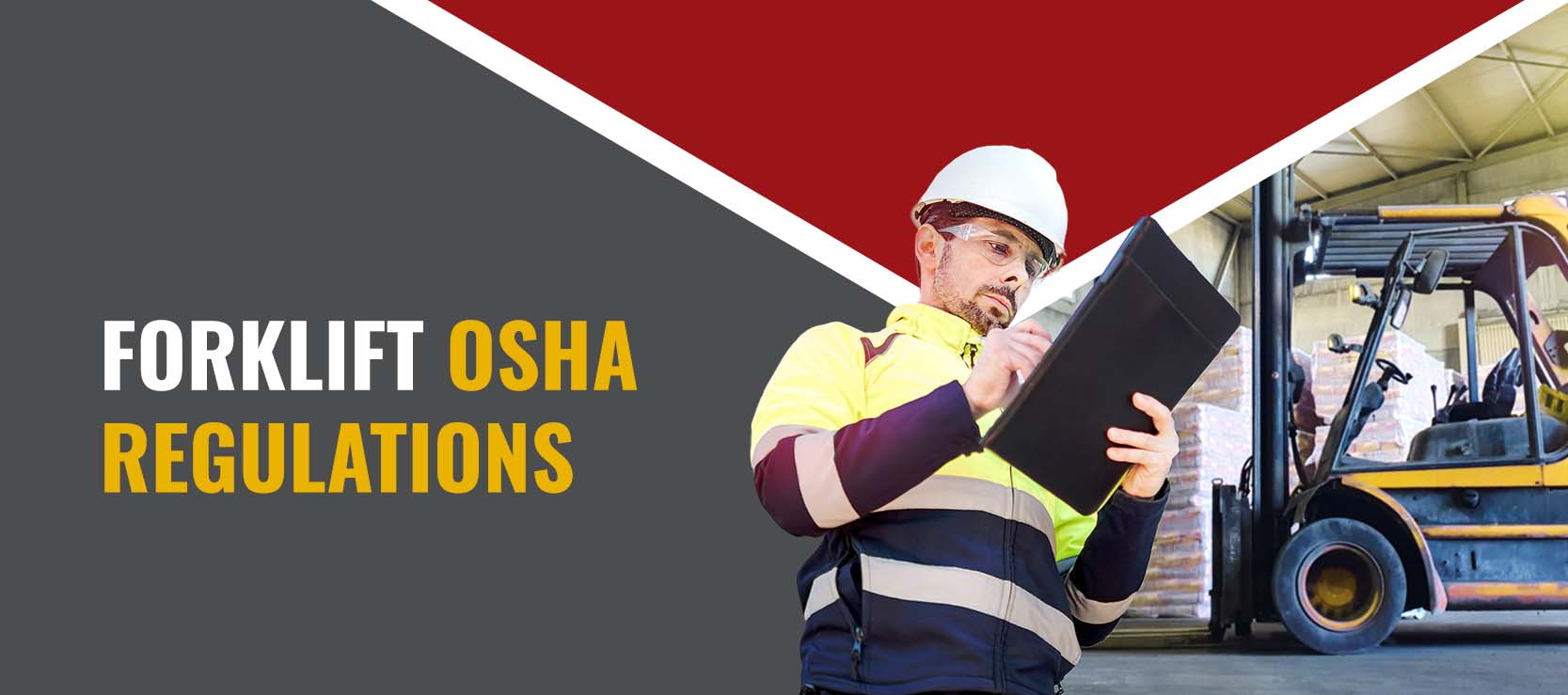
The Occupational Safety and Health Administration (OSHA) regulates the use of forklifts in warehouses and other facilities. These regulations govern everything from storage to training. Violating these standards can lead to fines and other issues for your company. It can also lead to damaged goods, broken equipment and even work-related injuries and deaths.
This is why OSHA compliance is so important. It doesn't just protect everything and everyone in your warehouse. It can also save your company time and money that you could otherwise spend on repairs or unsafe and inefficient practices.
Learn more about OSHA's standards for powered industrial trucks, including training requirements, equipment requirements and state-level regulations.
The Three Core Pillars of OSHA Forklift Compliance
The official OSHA standard for powered industrial trucks is designated 29 CFR 1910.178. It covers three primary dimensions:
- Operator training: All operators must be trained and certified to operate a forklift safely.
- Equipment condition: All forklifts and their components must adhere to certain quality standards.
- Workplace operations: The structure of the warehouse itself must allow forklifts and team members to operate safely in the same space.
We discuss the standards in each category in more detail below.
OSHA Forklift Training and Certification Requirements
All employers must offer OSHA-compliant forklift training and certification programs.
The training must be tailored specifically to the type of forklift the trainee will be using. Counterbalance forklifts and narrow aisle forklifts have a lot in common, but they are unique vehicles with distinct limitations. The weight difference alone can dramatically change daily operation. To make the process easier, some companies outsource their forklift operator training. These experts understand OSHA regulations and have experience working with a wide range of lifts.
The certification only applies to the type of lift the trainee practiced with and is site-specific. So, if a trainee moves to a different facility, they will need to be recertified.
The employer must also maintain detailed records of all training and certifications that have been administered.
What Forklift Training Must Include
All forklift training should include three essentials:
- Formal instruction: This stage often includes lectures, videos and written materials. Many of these tools are digitized now, but much of the content is the same. They cover stability triangles, how to calculate load capacity and more.
- Hands-on training: In this stage, a qualified instructor supervises trainees as they practice with the lift. Instructors run trainees through basic movements and help them perfect safe practices.
- Evaluation: In the final stage, trainees test their skills in the warehouse. Instructors observe and review their performance to determine if they meet the requirements of certification.
Operator Evaluations and Retraining
Every forklift operator has to be recertified periodically. Typically, this recertification takes place every three years. Some workplace incidents can be cause for complete retraining, though. For example, if an operator injures another person while using a lift, they will need to undergo retraining to prevent future incidents.
Other events that warrant retraining include:
- A near-miss with a person while operating the lift.
- An unsafe interaction with the warehouse's goods or storage system.
- Treating a lift like a toy or otherwise displaying a skill deficiency.
Forklift operators must retrain if they switch lift types or move to a different facility.
OSHA Equipment Quality Requirements
OSHA has strict guidelines regarding forklift inspections. They ensure that lifts are always in working order and safe to use.
The core of these standards is daily inspection. A qualified party should evaluate the machine's components and mechanisms to ensure they work properly. For most lifts, it's best to conduct this inspection before placing the lifts into service. If you use it around the clock, inspect it after each shift.
If you find a problem, remove the lift in question from service and mark it as out of order.
The Two Stages of Daily Inspections
Divide each daily inspection into two stages.
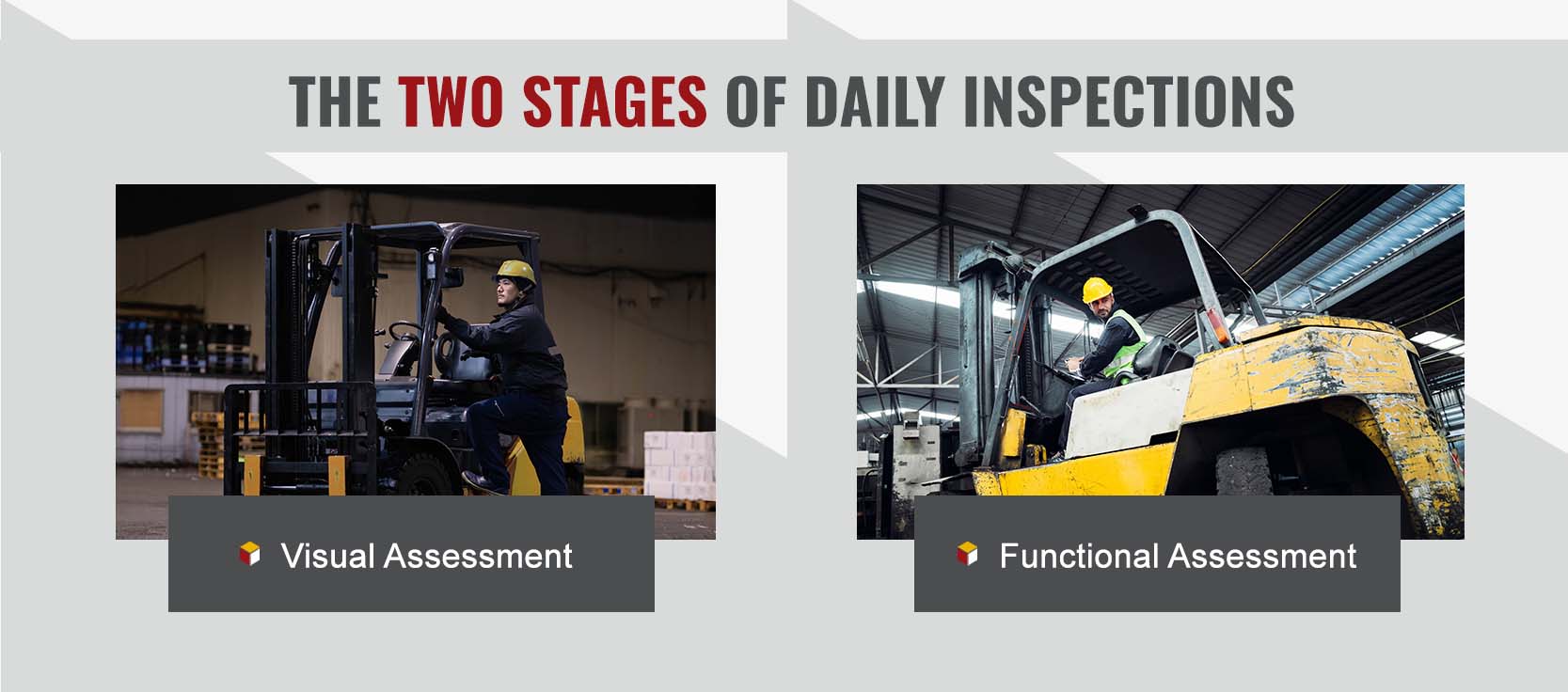

The first is a visual assessment. Before turning on the lift, you should:
- Check for fluid leaks.
- Verify tire pressure and condition.
- Inspect the lifting forks for cracks and other damage.
- Test the lights.
- Make sure the overhead guard is intact.
- Inspect the safety decals to make sure they're legible.
The second is a functional assessment. After turning the lift on, you should:
- Test the brakes.
- Make sure the steering is responsive.
- Test the horn.
- Check the lights.
- Run the lift and tilt mechanisms through their full paces.
If you identify any issues in either stage, remove the lift from service until it can be repaired or replaced.
Record-Keeping and Defect Reporting
One of the best ways to protect your company is to keep detailed files on all inspections and defects. This practice doesn't just promote OSHA compliance. It also helps your company identify maintenance trends over time so that you can address defects before they get worse. Keeping a daily inspection log is a great place to start.
Your company needs to have a reporting protocol in place for when you identify a defect. Workers should report all defects to a supervisor or the maintenance department. The lift can then be tagged with an out-of-order sign until it's repaired.
OSHA Environmental Requirements
While most OSHA standards for lifts focus on the lifts and operators, workplace conditions are also covered. All employers using forklifts are responsible for making the area safe for those lifts.
One of the best ways to do this is by creating separate lanes for lifts and people. You can mark the lanes with floor markings and even physical barriers. This separation prevents the two from impeding each other and minimizes the risk of accidents.
You can also promote safety in your warehouse by:
- Keeping aisles free of clutter.
- Cleaning up oil spills and other messes immediately.
- Repairing cracks or potholes that can destabilize lifts.
- Securing trailers to the loading dock with wheel chocks.
- Making sure dock plates have the correct weight capacity.
- Installing proper ventilation, especially in charging areas.
- Installing fire extinguishers and eyewash stations near charging areas.
State-Level Safety Standards
Many states, such as Indiana and Michigan, have their own state standards that are OSHA-approved. They must be at least as effective as OSHA to earn this approval.
If your warehouse is in one of these states, the state regulatory body sets the standards. For example, if you live in Michigan, your warehouse will follow the standards set by the Michigan Occupational Safety and Health Administration (MIOSHA). In Indiana, you'll follow the Indiana Occupational Safety and Health Administration (IOSHA).
Always check your state's standards to ensure that operators, lifts and the environment are all in compliance.
Repair Lifts and Train Operators With Bohl Equipment Co.
Since 1924, Bohl Equipment Co. has been providing high-quality equipment, parts and service to Ohio and Indiana. We carry new and used lifts from brands like Hyster and Yale. We also offer forklift operator training and certification so your teams can focus on what matters most. Our technicians average over 12 years of industrial experience. They are fully equipped to help your operators do their best work with the best machines on the market.
To learn more about our offerings, fill out our contact form or reach out at 888-694-1399.