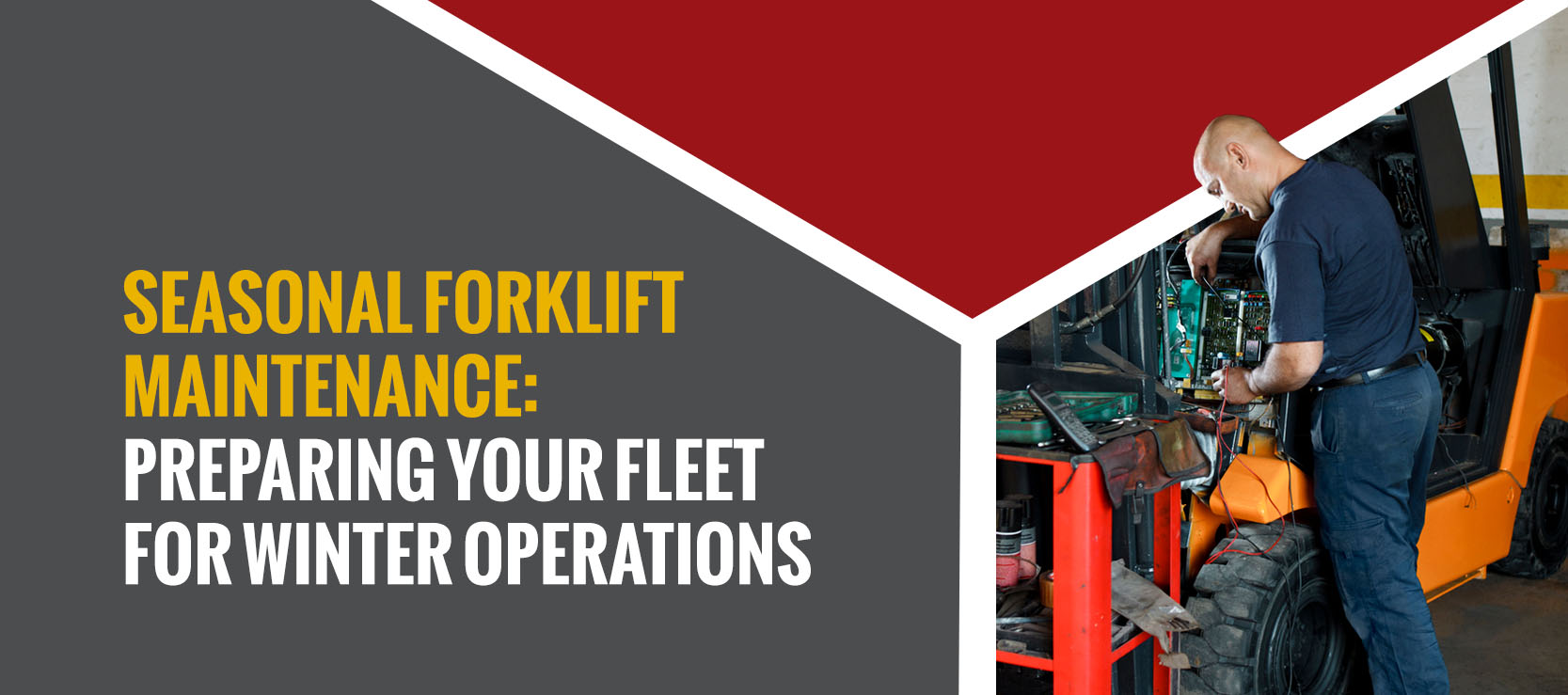
The result of a key forklift failing during a critical winter shipment is a cascade of delays and costs — the dread of every fleet manager. However, failures can be avoided with the right forklift winter preparation.
This definitive forklift maintenance checklist shows you how to winterize your fleet in six actionable steps so you can focus on maximizing uptime, ensuring operator safety and protecting your equipment investment.
Why Winter Is a Threat to Your Forklift Fleet
With the holiday season landing in the coldest months, business owners and fleet managers do not have the luxury of powering down at the time of year when cold mornings drain batteries, oil thickens and your team must brave ice or frost. The first step in heading off these challenges is understanding the biggest threats to your cold-weather forklift operation:
Battery Capacity Reduction
In a lead-acid battery, frigid temperatures slow the chemical reaction between the lead plates and sulfuric acid. This thickens the electrolyte fluid, which increases internal resistance and forces the battery to waste energy just to function. The result is a dramatic drop in output, cutting effective power by as much as 50% in freezing conditions.
Lithium-ion (Li-ion) batteries perform better in cold temperatures, but charging is a notable weakness. Attempting to charge a Li-ion battery below freezing — 32° Fahrenheit or 0° Celsius — can cause “lithium plating.” This is a damaging, irreversible process that permanently reduces capacity and creates safety risks. To prevent this, most modern Li-ion batteries feature a battery management system (BMS) that automatically blocks charging until the battery reaches a safe temperature.
Fluid Thickening
Every fluid in your forklift is engineered to create a protective fluid film that prevents metal-on-metal contact, which causes wear and heat. In winter temperatures, the molecules in these fluids slow down, causing the fluid to thicken and resist flow. This increased viscosity is the root cause of many winter-related forklift issues.
In a hydraulic system, thick fluid leads to slow, jerky or even unresponsive mast and attachment movement. This directly impacts productivity and can become a safety hazard if an operator cannot lift, lower or tilt a load smoothly and predictably. For an engine, thick oil strains the battery and starter. When it fails to circulate quickly, critical components like camshafts and bearings are starved of lubrication when they need it most. This is a primary cause of accelerated engine wear.
Tire and Traction Dangers
Winter attacks your forklift's grip in two ways. It causes the tire's rubber compound to harden and it lowers the tire pressure. For every 10° Fahrenheit drop in temperature, your tires can lose one to two pounds per square inch (PSI) of pressure as the air inside contracts.
An under-inflated tire on a forklift can cause excessive wear and pose a major safety hazard. It reduces the machine's stability and compromises its load-bearing capacity, significantly increasing the risk of a tip-over accident, especially when lifting heavy loads or turning. On slick surfaces like ice or wet concrete, the combination of hardened rubber and improper inflation can result in dangerously long stopping distances.
The Ultimate Winter Forklift Maintenance Checklist
Now that you understand the threats, it's time to take action. This checklist provides a systematic approach to winterizing every core component of your forklift.

1. Batteries and Electrical Systems
Learning how to winterize a forklift battery and electrical system is crucial. To ensure operational safety, efficiency and longevity, test the load capacity of all batteries and fully charge them for optimal performance. Verify that all cable connections and terminals are clean to maintain a solid connection.
A battery's performance is already compromised by the cold. Starting with a full charge and clean connections is your best defense against a dead forklift.
2. Fluids, Lubricants and Coolant
Prevent costly breakdowns and extend equipment lifespan by checking all fluid levels. Consult the manufacturer's recommendations and switch to winter-grade lubricants and hydraulic fluids if necessary. Make sure coolant is rated for the lowest anticipated temperatures.
Using the correct viscosity fluids results in smooth, efficient cold-weather forklift operations and prevents long-term damage. The right coolant prevents the engine block from cracking. Manufacturer-recommended winter-grade or multi-viscosity fluids are designed to remain fluid at lower temperatures so the protective film is present, safeguarding your components and maximizing performance.
3. Tires, Traction and Brakes
Winter forklift maintenance for tires and brakes is crucial for safety, stability and operational efficiency. Proper tire pressure is critical for stability and load-bearing capacity. Worn tires and a compromised braking system can be disastrous on slick surfaces. Here's how to stop the risk of accidents in its tracks:
- Inspect tires for wear, damage and proper inflation before each use.
- For outdoor operations, consider investing in cold-weather or snow-rated tires.
- Conduct a thorough inspection of the entire braking system.
4. Engine and Fuel Systems
Cold-weather-related failures can result in costly repairs. A functional block heater is often the difference between a forklift that starts and one that doesn't. Fuel additives prevent costly fuel line freezes. Safeguard your internal combustion (IC) forklift in cold, icy conditions by testing the block heater and glow plugs. For diesel models, treat the fuel with an anti-gelling additive.
5. In-Cab Environment
Driver comfort is an important part of forklift winter preparation. Cold, uncomfortable conditions can lead to reduced concentration, slower reaction times and increased accidents. Make sure the cab heater, defroster and all door and window seals are in perfect working order. Implement winter training that includes instruction on how to safely handle winter conditions and adjust speed and braking distance accordingly.
A comfortable cab and clear, unobstructed view are nonnegotiable safety requirements for operators.
6. Essential Winter Gear
Winter gear is crucial for forklift operators. It protects against hazards like hypothermia, frostbite and slipping on icy surfaces, which can cause accidents and injury. Recommend insulated, high-visibility clothing and nonslip footwear. Thermal and waterproof gloves keep hands warm while maintaining the dexterity needed to operate the forklift controls safely. Headwear is important too — an insulated hat or hood can prevent heat loss.
Protecting your team from the elements is a fundamental safety responsibility and is key to maintaining morale and productivity.
Ensure a Productive Winter With Bohl Equipment Co.
Preparing your fleet for winter operations minimizes costs by reducing downtime and repairs. It extends the equipment's lifespan and improves safety by preventing accidents in harsh conditions. This proactive approach ensures reliable performance during the busy winter season and protects your assets from costly, weather-related damage.
Ensure your fleet is ready. The expert technicians at Bohl Equipment Co. have the experience and parts inventory to handle all your winter maintenance needs, from battery testing to fluid replacement.
Don't wait for the first freeze. Contact Bohl Equipment Co. today to secure your spot for a complete winterization service.